Source Smart Toilet Models for Bathrooms, Hotels, and Resorts
Compare 30 smart toilet listings featuring modern designs, automatic flushing, and various voltage options. Buyers can evaluate specifications like water displacement, installation types, and customization availability for bathroom applications.
Key considerations
Products List


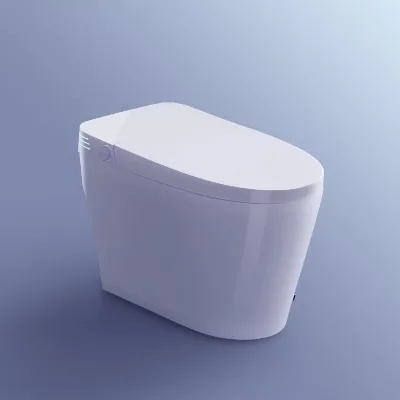
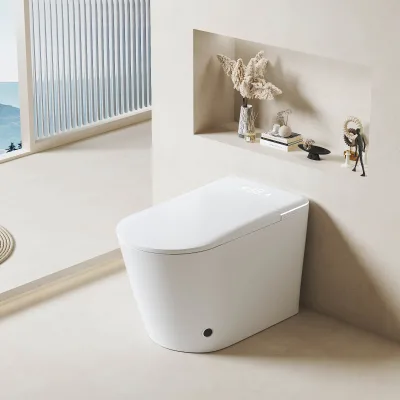


Comprehensive Sourcing Guide
Strategic Sourcing Guide for Intelligent Toilet Systems
Understanding the Technical Landscape of Smart Toilets
The modern smart toilet market has evolved from simple automated fixtures to complex, integrated hygiene systems. When sourcing these products, buyers must first distinguish between the various technical configurations available. The core product category is defined as an "Automatic Intelligent Toilet" or "Intelligent Toilet," designed primarily for adult application in bathroom settings. A critical observation in the current supply landscape is the diversity in structural design. While some units are engineered as "Two Piece" systems, others feature a "Built-in Cistern" which integrates the water tank directly into the bowl structure. This distinction is vital for installation planning, as it dictates the required wall clearance and plumbing access.
The flushing mechanism represents another primary technical differentiator. The observed data indicates a prevalence of "Whirlpool" flushing methods, which utilize a specific water flow pattern to ensure efficient waste removal while maintaining water levels. This is often paired with "Siphonic" drainage systems, which are known for their quiet operation and superior flushing power compared to washdown systems. The control interface varies significantly across models; some units utilize "Side Buttons" or a "Top Push Button" for manual operation, while others are equipped with "Telecontroller" capabilities for remote management. The "Flush Button Type" and "Flushing Control Method" are often listed as "Hand Press Type," suggesting a mechanical trigger that may be integrated into an automated sequence.
Water management is a central engineering challenge in this sector. The "Water Displacement" and "Water Consumption" metrics vary, with observed ranges spanning from 3.0 to 6.0 liters per flush. Some products are explicitly categorized as "Water Saving Type," while others list specific consumption rates like "4L-6L." Buyers must verify the specific "Water Consumptionion" (likely a typo for consumption) for each model to ensure compliance with local water conservation regulations. Furthermore, the "Working Voltage" requirements are diverse, with observed specifications including 220V, 100V110V, and a broader range of 200240V. This variance necessitates careful electrical planning, especially for international procurement where grid standards differ.
Compliance and Certification Verification Protocols
In the B2B procurement of sanitary ware, compliance is not merely a formality but a critical risk mitigation strategy. While the supply chain data references potential certifications such as CE, RoHS, and REACH, these should be treated as background indicators rather than guaranteed attributes for every listed unit. Buyers must actively verify the certification status of the specific supplier and the specific model before finalizing a purchase order. The absence of a visible certification mark on a product listing does not confirm non-compliance, but it does require immediate inquiry to the supplier.
The "prod_standard" field in the product data provides dimensional specifications, such as 695X490X540mm or 75X48X55mm, which serve as physical benchmarks. However, these dimensions are distinct from international safety or performance standards. Buyers should request independent test reports that validate the electrical safety of the "Working Voltage" components and the material integrity of the "Ceramic" body. The "Temperature" attribute, listed as 1280 ℃, likely refers to the firing temperature of the ceramic material during manufacturing, a key indicator of density and durability. However, this is a manufacturing parameter, not a product performance standard.
When evaluating compliance, the "prod_origin" is a significant factor. The data indicates origins in "China" and specifically "Guangdong, China." While these regions are major manufacturing hubs, the specific factory's adherence to international standards varies. Buyers should demand proof of compliance for the target market, whether it be the European Union's CE marking for electrical safety or the US-based UL standards. The "Low-confidence background" section of the data suggests that certifications like CE and RoHS are associated with the category but not explicitly confirmed for every item. Therefore, the procurement strategy must include a clause requiring the supplier to provide valid, up-to-date certification documents for the specific batch being shipped.
Cost Drivers and Pricing Dynamics
The pricing structure for intelligent toilets is influenced by a complex interplay of features, materials, and customization options. The observed listed price range in the market spans from 1 to 516 USD, a wide disparity that reflects the difference between basic ceramic units and fully automated smart systems. The "1 USD" figure likely represents a component or a very basic model, while the "516 USD" cap suggests a high-end unit with advanced features like "Leakage Protection," "Hot Air Blowing," and "Solf Closes The Seat Cover" (likely a typo for Soft Close).
Several key factors drive these costs. First, the "Material" is consistently identified as "Ceramic," but the quality of the clay, the firing temperature (1280 ℃), and the glazing process significantly impact the final price. Higher-grade ceramic offers better resistance to staining and cracking, justifying a higher price point. Second, the level of "Customization" available is a major cost variable. The data confirms that "Customization: Available" and "OEM/ODM: Accept" are standard capabilities. Buyers seeking custom branding, unique color finishes, or specific dimensional adjustments will incur additional costs beyond the base unit price.
The "Minimum Pit Spacing" is another technical constraint that affects pricing. Observed values include "305mm" and a range of "300-400mm," with some models specifying a "Rough in" of "250 /300mm." Units designed for tighter spaces or non-standard rough-in distances may command a premium due to specialized engineering. Additionally, the inclusion of accessories such as a "PP Seat Cover" and "Flush Valve" can influence the final cost. The "prod_packing" method, whether "Box Packaging" or "Carton," also affects logistics costs, which are often passed on to the buyer.
Typical Applications and Installation Requirements
The primary "Application Scenarios" for these units are clearly defined as "Bathroom" environments, specifically for "Adult" use. The "Installation Type" is predominantly "Floor Mounted" or "Standing Floor," which dictates the structural requirements of the facility. Buyers must ensure that the floor can support the weight of the unit, particularly when filled with water and occupied. The "Base Pattern" is observed as "Round," which is a common design choice for modern, concise aesthetics, but square or oval options may exist in other product lines.
A critical aspect of application is the "Minimum Pit Spacing" and "Rough in" distance. The data shows a "Minimum Pit Spacing" of 305mm and a range of 300-400mm. This measurement refers to the distance from the wall to the center of the drain pipe. If a facility's existing plumbing does not match these specifications, significant renovation costs may be incurred. The "Leakage Protection" feature is particularly relevant for commercial or high-traffic applications where water damage risks are higher. This safety feature should be verified during the installation phase to ensure it is properly connected to the building's drainage system.
The "Style" is described as "Modern Concise," aligning with contemporary architectural trends. However, the physical dimensions, such as the "prod_standard" of 700380660mm or 680400470mm, must be cross-referenced with the available space in the target bathroom. The "Lid" mechanism, described as "Solf Closes The Seat Cover," implies a soft-close feature that reduces noise and wear, a desirable trait for hospitality and residential applications. The "Flush Handle Location" being "Top Push Button" or "Side Buttons" also influences the user experience and the spatial layout of the bathroom fixtures.
Supplier Evaluation and Operational Due Diligence
Evaluating suppliers for intelligent toilets requires a multi-faceted approach that goes beyond price comparison. The "OEM/ODM: Accept" status indicates that suppliers are willing to engage in custom manufacturing, which is a positive sign for buyers looking to build a private label. However, this also requires a robust evaluation of the supplier's engineering capabilities. Buyers should assess the supplier's ability to handle the "Customization" requests, including changes to the "prod_model" (e.g., 2024-252, 2024-266, 2024-153) and the "prod_standard" dimensions.
The "Location" data points to "China" and "Guangdong, China" as the primary origins. While this region is a manufacturing powerhouse, buyers must verify the specific factory's capacity and reputation. The "Minimum Order Quantity" (MOQ) ranges from 1 to 100 units, offering flexibility for both small-scale pilots and large-scale deployments. However, the "MOQ" should be confirmed for custom orders, as OEM/ODM projects often have higher minimums. The "prod_packing" method, whether "Box Packaging" or "Carton," is also a key factor in logistics and should be evaluated for its ability to protect the "Ceramic" material during transit.
Buyers should also investigate the supplier's quality control processes. The "Working Voltage" diversity (220V, 100V~110V) suggests the supplier may have multiple production lines or the ability to reconfigure units for different markets. This flexibility is a strength, but it also increases the risk of errors if not managed correctly. A thorough audit of the supplier's production line, including their testing procedures for "Leakage Protection" and "Flushing Method," is essential. The "Accessories" provided, such as the "PP Seat Cover" and "Flush Valve," should be inspected for quality and compatibility with the main unit.
Quality Control and Long-Term Procurement Considerations
Ensuring the long-term reliability of intelligent toilets requires a rigorous quality control (QC) framework. The "Water Displacement" and "Water Consumption" metrics are critical for operational efficiency. Buyers should verify that the "Whirlpool" flushing method performs consistently across different water pressure conditions. The "Siphonic" drainage system should be tested for noise levels and clogging resistance. The "Temperature" of 1280 ℃ indicates a high-quality ceramic body, but this must be complemented by a rigorous inspection of the glaze for defects that could lead to staining or bacterial growth.
The "Leakage Protection" feature is a vital safety component that must be tested under pressure. Buyers should request test results that demonstrate the system's ability to detect and prevent leaks, especially given the electrical components involved. The "Working Voltage" specifications must be validated to ensure the unit operates safely within the specified range. Any deviation could lead to electrical hazards or premature failure of the "Telecontroller" or other electronic components.
Long-term procurement considerations also include the availability of spare parts. The "Accessories" listed, such as the "PP Seat Cover" and "Flush Valve," should be readily available for replacement. The "prod_model" numbers (e.g., 2024-252, 2024-266) serve as unique identifiers that should be used to track inventory and order replacements. The "OEM/ODM" capability suggests that the supplier can produce custom parts, but this should be formalized in a long-term agreement to ensure continuity.
Finally, the "prod_packing" method must be evaluated for its ability to protect the unit during storage and transport. "Box Packaging" and "Carton" options should be inspected for durability. The "Style" and "Base Pattern" should be consistent with the buyer's brand identity, and any changes to the "prod_standard" dimensions should be communicated clearly to avoid installation issues. By focusing on these technical and operational details, buyers can secure a reliable supply of intelligent toilets that meet their specific needs and standards.
Comparative Analysis of Key Product Attributes
To facilitate decision-making, the following table summarizes the key attributes observed in the supply data. This comparison highlights the variability in specifications that buyers must navigate.
| Attribute Category | Observed Variations | Procurement Implication |
|---|---|---|
| Product Name | Automatic Intelligent Toilet, Intelligent Toilet | Verify exact functionality; "Automatic" implies sensors, "Intelligent" may imply app control. |
| Material | Ceramic | Standard material; verify firing temperature (1280 ℃) for durability. |
| Installation Type | Floor Mounted, Standing Floor | Requires floor reinforcement; check "Minimum Pit Spacing" (300-400mm). |
| Water Consumption | 3.0-6.0L, 4L-6L, Water Saving Type | Critical for compliance; verify specific liters per flush for the target model. |
| Working Voltage | 220V, 100V | Must match local grid; verify adapter requirements for mixed voltage units. |
| Flushing Method | Whirlpool, Siphonic | Impacts noise and efficiency; "Whirlpool" is common for modern units. |
| Control Method | Hand Press, Telecontroller, Side Buttons | Determines user interface; "Telecontroller" suggests remote capabilities. |
| Dimensions | 695X490X540mm, 75X48X55mm, etc. | Must match bathroom layout; "Rough in" varies (250/300mm). |
| Customization | Available, OEM/ODM Accept | Enables branding; verify MOQ and lead time for custom orders. |
| Origin | China, Guangdong, China | Major hub; verify factory certifications and quality control processes. |
This table serves as a reference for buyers to identify the specific attributes required for their project. The wide range of values for each attribute underscores the importance of detailed specification sheets and direct communication with suppliers. By carefully analyzing these variables, buyers can make informed decisions that align with their technical requirements, budget constraints, and quality standards. The procurement process for intelligent toilets is complex, but a disciplined approach to evaluating these factors ensures a successful outcome.
FAQs
What installation type do these smart toilets use?
These units primarily use a floor-mounted installation type. The base pattern is typically round, and the minimum pit spacing ranges from 300 to 400 millimeters to ensure proper fit.
How does the flushing mechanism work on these models?
The flushing method is a whirlpool system designed for efficient waste removal. It utilizes a siphonic drainage structure and consumes between 3.0 and 6.0 liters per flush.
Can I customize the product specifications for my brand?
Yes, customization is available and OEM or ODM services are accepted. Buyers can request specific changes to models like 2024-252 while maintaining the core ceramic material and modern concise style.
What voltage requirements must be met for operation?
Working voltage varies by model, with options including 220V, 100V to 110V, or a range of 200 to 240V. Buyers must verify the specific electrical requirement for the target installation location.
Which features ensure safety during operation?
Safety is ensured through leakage protection and a soft-close seat cover mechanism. The ceramic body is fired at 1280 degrees Celsius to ensure durability and resistance to damage.
What is the minimum order quantity for these units?
The minimum order quantity ranges from 1 to 100 units depending on the supplier. Custom orders may have different thresholds, so buyers should confirm specific MOQs before placing an order.